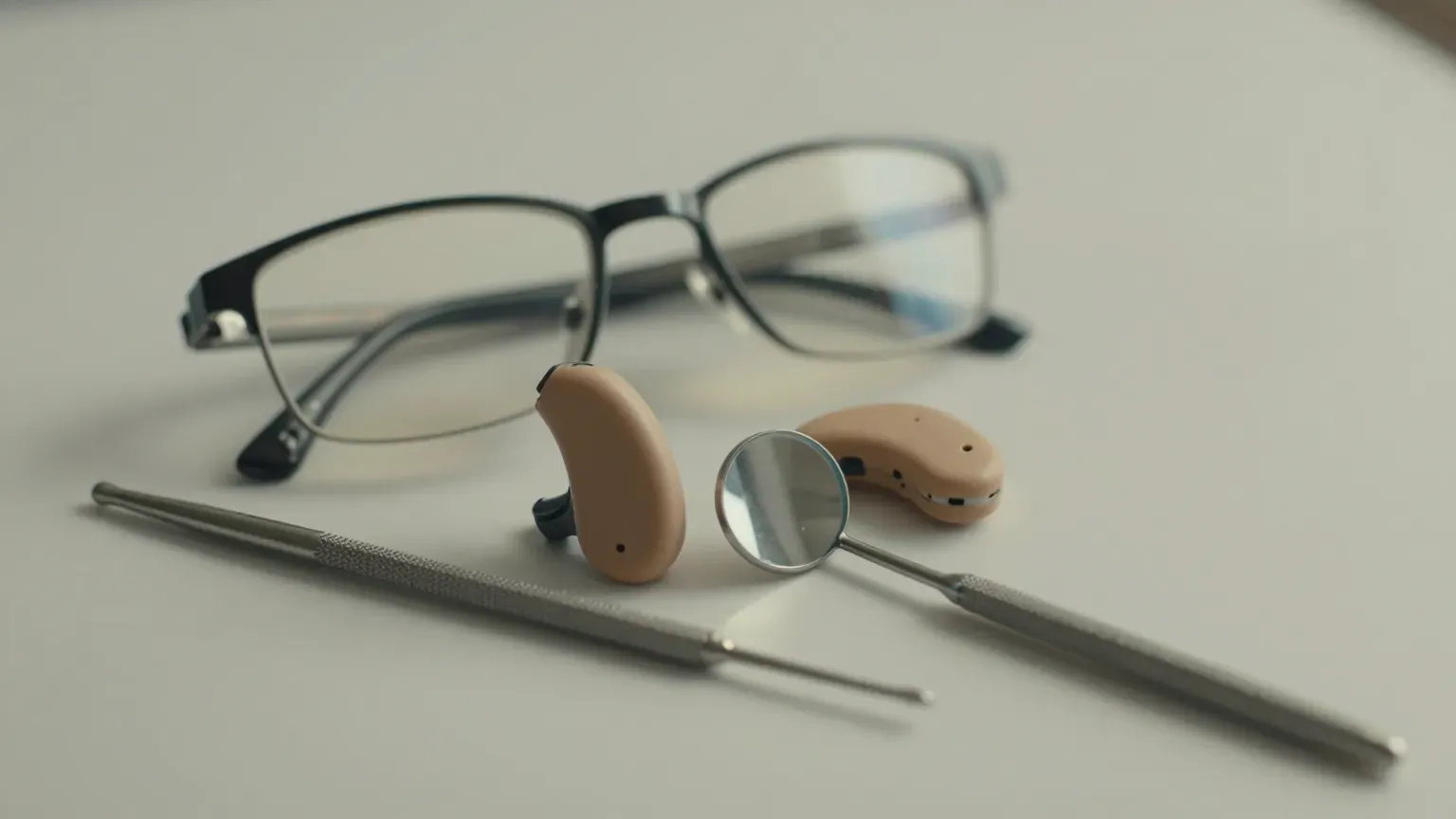
Dental, vision and hearing cover is where we see the widest gap between what people think they bought and what they actually bought. The plans are cheaper than medical cover, which makes them feel low-stakes, which is exactly why they are read least carefully.
Original Medicare generally does not include them
Routine dental, routine vision and hearing aids are largely outside Original Medicare. That is why they get bought separately, and why many Medicare Advantage plans advertise them as extras.
“Includes dental” on an Advantage plan can mean a full benefit or a small annual allowance. Those are very different things sold with the same three words. Read what the allowance actually is before it factors into your decision.
The four things that decide whether a plan is any good
The waiting period. Many standalone dental plans will not cover major work — crowns, bridges, dentures — for a period after the policy starts. Sometimes months, sometimes longer. If you buy a plan because you know you need a crown, the waiting period is the entire question, and it is usually printed somewhere quieter than the premium.
The annual maximum. Most dental plans cap what they will pay in a year. Once you reach it, you pay everything. Major work can reach a modest cap quickly.
The category split. Plans divide work into preventive, basic and major, and cover each at a different rate. A plan can be generous on cleanings and thin on the thing you actually need.
The network. Same as medical: a plan is only useful if the dentist you intend to see is in it. Check by name and location.
Hearing, specifically
Hearing aids are usually the largest single out-of-pocket item in this category, and they are the one most often covered by an allowance rather than a benefit.
Two questions worth asking before you rely on hearing cover: is the allowance per aid or per pair, and how often does it renew? Both answers vary widely and both change what the cover is worth.
Vision
Routine eye examinations, frames and lenses are the usual scope. Medical eye conditions — cataracts, glaucoma — are generally handled by medical cover rather than a vision plan, which surprises people at the point they need it most.
If you are choosing a vision plan mainly because of a medical eye condition, check which of the two is actually going to pay.
How to read one of these plans in five minutes
In this order:
- Waiting period for the category of work you expect to need.
- Annual maximum, and what counts toward it.
- What the plan pays for that specific category, not the average.
- Is your provider in network, by name and location.
- Only then, the monthly cost.
If a plan looks cheap and you have not found the first four numbers, you have not found the plan yet.
The honest summary
For someone with healthy teeth who wants cleanings covered, these plans are usually straightforward and reasonable value.
For someone who already knows they need significant work, the waiting period and the annual maximum frequently mean the plan will not do what they are hoping it will do — and it is better to know that before buying than after.
Buy it before you need it, or accept what that costs
Dental cover has an awkward property: the moment you are most motivated to buy it is the moment it is least useful.
Waiting periods exist precisely because insurers expect people to buy a policy the week after a dentist says the word “crown.” Cleanings and exams are often covered immediately. Fillings frequently sit behind a shorter wait. Crowns, bridges, dentures and implants typically sit behind the longest one.
So if you already know significant work is coming, be clear-eyed: a policy bought now may pay nothing toward it. That is not always a reason to skip the policy — the work after this work still counts — but it should be a decision made knowingly rather than discovered later.
The people who get the most from dental cover are the ones who bought it in a year when nothing hurt.
Read the exclusions before the benefits
Benefit summaries are written to be attractive. The exclusions list is written by lawyers, and it is where the answers are.
Look specifically for: missing tooth clauses, which exclude replacing a tooth that was already gone when the policy started; frequency limits, capping how often a cleaning, X-ray or replacement is covered; downgrade clauses, where the plan pays for the cheaper material and you cover the difference on anything better; and implant exclusions, which are common enough that you should assume they apply unless the policy says otherwise.
None of these are unusual or improper. All of them decide what you actually receive.
Vision: the benefit is smaller and simpler than it looks
Vision cover is mostly a discount arrangement rather than insurance in the ordinary sense. It generally means a routine exam, an allowance toward frames, and something toward lenses or contacts on a defined cycle.
Two questions decide whether a policy is worth it for you. How often does each element renew — an annual exam with frames only every other year is a common shape. And is your optician in the network, because vision networks are often narrow and the out-of-network benefit is frequently much weaker.
The honest arithmetic is usually straightforward: total the premium across a year and compare it with what you would pay for the same exam and glasses without cover. For some people it wins clearly. For others it does not, and it is worth knowing which you are.
Hearing: ask two questions and the picture clears
Hearing cover is almost always an allowance rather than a full benefit, and allowances vary enormously in what they actually deliver.
Is it per aid or per pair? This is the difference between an allowance that covers a meaningful share and one that covers half of what you need. Most people who need hearing aids need two.
How often does it renew? Devices have a working life measured in years, and an allowance that renews on a longer cycle than that leaves you buying the next set yourself.
Ask both explicitly. Summary pages routinely state an amount without stating either, and the amount alone is not enough to compare two plans.
Standalone policy or an Advantage allowance?
Both routes are legitimate and they suit different situations.
An Advantage allowance suits routine maintenance — cleanings, exams, a modest contribution toward glasses. It is included rather than separately priced, which makes it feel free, and for someone whose needs are genuinely routine it is often enough.
A standalone policy tends to carry a higher annual cap and better coverage for major work, at the cost of a separate premium and, usually, waiting periods. If you expect a crown, a bridge or dentures, the arithmetic generally favors it — provided you start early enough for the waiting period to have run.
The mistake is assuming the bundled allowance is equivalent to a policy because both are described as dental coverage. Compare the annual cap, not the label.
What to ask before you buy
- What is the waiting period for each class of work, particularly major?
- What is the annual maximum, and does it reset on the policy year or the calendar year?
- Is there a missing tooth clause?
- Are implants covered, excluded, or downgraded?
- Is my dentist, optician or audiologist in the network?
- For hearing: per aid or per pair, and how often does it renew?
If a policy is being sold to you and these answers are not readily available, that is itself an answer.
We will tell you which of those two you are in. If it is the second, we will say so plainly, even though it means we are talking you out of a sale.
Where to check this independently
Nothing on this page is advice about your situation, and none of it replaces the free sources. The Medicare Plan Finder, 1-800-MEDICARE, your SHIP counselor and HealthCare.gov are free, independent, and show plans we cannot sell.
Healthbase is a licensed insurance agency, not a government agency and not connected with Medicare or any federal or state program.